


Improving Video Game Recommendations: Addressing Challenges and Opportunities in E-Commerce
Harish Alagappa
Senior Content Writer
Gameopedia
Read Time :
5 Min

(This blog was updated and republished on June 19, 2026)
Have you ever scrolled what felt like an entire storefront catalog trying to find a game you might like? Or spent more time deciding what to watch than actually watching? Most of us have. It usually comes down to one thing: a lack of real personalization.
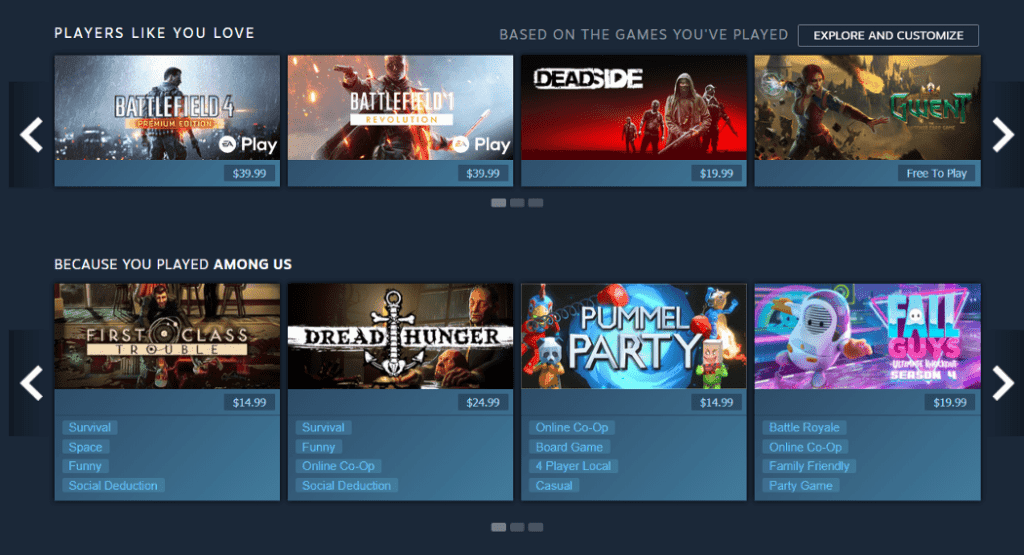
Personalizing products for customers is critical, and personalized experiences reliably lift sales and engagement. But the way most platforms do it is shallow. Play one shooter, and you get recommended another, simply because other people who played the first also played the second. Your reason for playing the first game might have nothing to do with why they did. When the recommendation misses, it quietly erodes trust in the platform's ability to understand you.
For platforms, that trust is the whole game. Strong recommendations drive revenue and differentiate you from competitors, particularly on cloud gaming services that depend on metadata built for cloud gaming discovery across devices. An e-commerce or discovery platform really needs to do three things well: acquire new users, convert the users it has, and keep them from leaving. A good video game recommendation engine touches all three and works best when backed by metadata tailored for digital game distribution platforms.
(If you're on the platform side of this, you can audit where your discovery and recommendation stack is breaking before reading on.)
The Importance of Recommendations
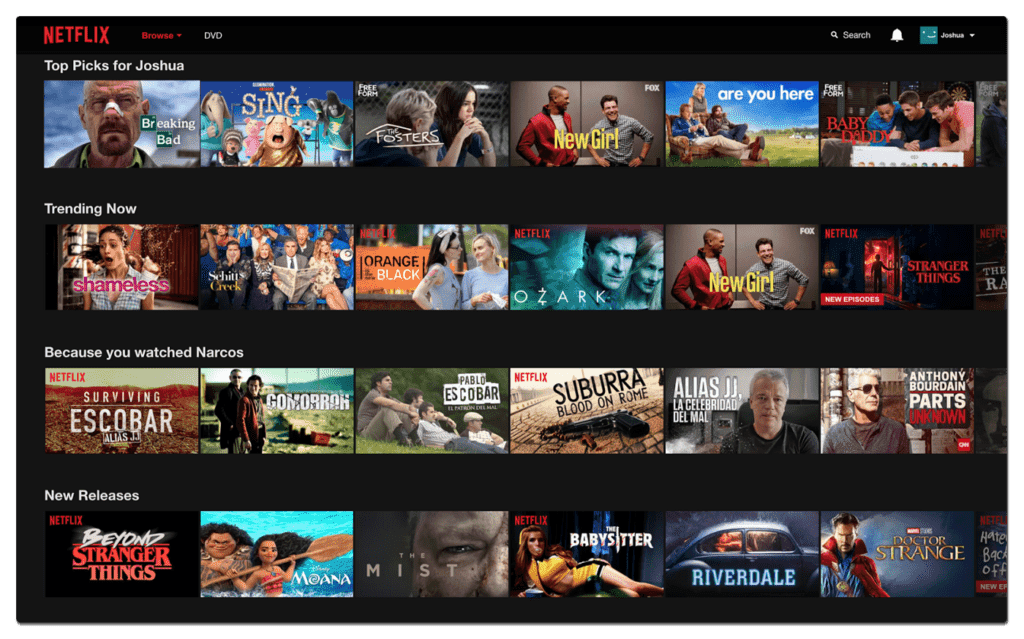
Personalization has become a major factor in the success of e-retail. Whether it is addressing customers by name or surfacing offers based on their interests, platforms keep investing in it. Recommendations are the deepest level of that personalization, and they matter on both sides of the transaction.
For a customer, good recommendations deliver a better experience, a sense of being understood, and more relevant deals. For the platform, the benefits are measurable: stronger engagement, higher retention, more traffic, and more revenue, especially for digital retailers that invest in metadata for game retail storefronts to improve discovery and conversion. The biggest names in media and e-commerce have built much of their success on recommendations, with a large share of what people watch or buy on the leading platforms coming directly from a suggestion rather than a search. Get them right and the catalog feels curated for each player. Get them wrong and even a huge library feels like noise.
Why Recommendations Still Fall Short
Despite knowing how vital good recommendations are, most platforms still struggle to suggest the right titles. A few problems recur.
Wrong recommendations. Weak data, limited signals, or algorithms that fail to reflect real user preferences produce poor outputs. Each miss reduces trust and engagement and wastes a real opportunity to convert.
Impersonal communication. People buy for different reasons, yet platforms still send generic messages. They often ignore both explicit signals, like reviews and stated preferences, and the implicit data in how players actually behave. "You might like Game X," with no sense of why, rarely lands. The recommendation that explains itself almost always outperforms the one that doesn't.
Choice overload. Too much choice is its own problem. A large share of shoppers abandon a purchase when choosing becomes too hard, and an overloaded, poorly filtered storefront makes that worse. The fix is not fewer games. It is better surfacing of the right ones.
Behavior vs. Motivation
The root cause of weak video game recommendations is that they are driven by behavior, not motivation. Behavior alone is a narrow signal compared with a fuller view of what a player actually wants.
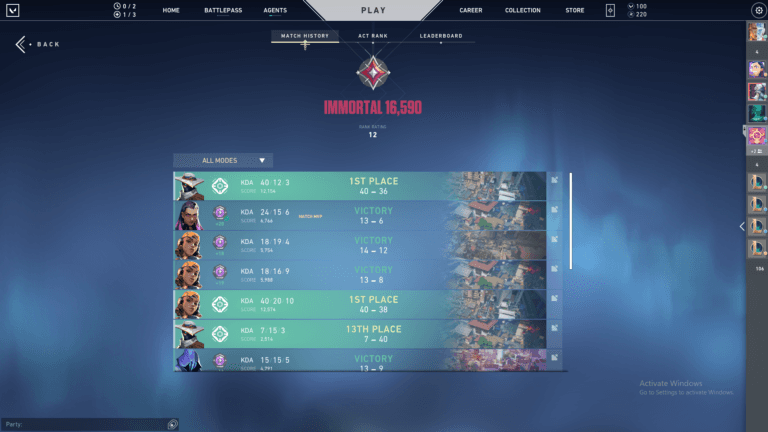
When several people play the same game, they often play it for completely different reasons. Take a popular tactical first-person shooter. Different players are pulled in by entirely different things:
The drive to compete, climb the ranks, and win
The depth of strategy and planning the game rewards
The social side, playing with friends or teaming up with strangers
The adrenaline and intensity of fast, high-stakes play
The release of aggression that action games provide
The shared behavior is "plays this shooter." In a collaborative filtering system, those shared actions can be treated as equivalent even when the motivations behind them could not be more different, which is why accurate and comprehensive video game information management on e-commerce websites is so important for distinguishing between player intents. A player who loves a competitive shooter for its lore and narrative may have no interest in a mechanically similar game that is thin on story. Behavior says they are the same player. Motivation says they are not.
A recommendation engine that only sees behavior and item similarity will keep making this mistake. One that understands motivation, through rich data about what each game actually offers, will not, especially when it is powered by search and discovery solutions built on detailed game taxonomy and structured data.
How to Improve Video Game Recommendations
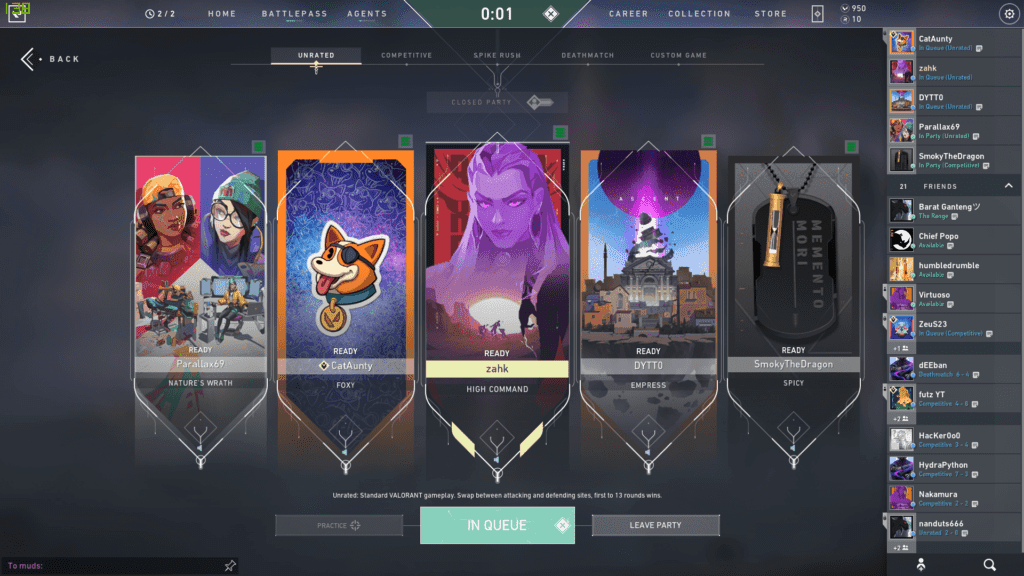
Player motivations come out of emotional and psychological makeup: values, personality, life situation, and taste. To meaningfully improve recommendations, you work in three steps. Understand the games you are recommending and why people play them. Understand your users at an individual level, drawing on both explicit signals and the implicit data in their actions. Then connect the two: match the why of the game to the why of the player, much like persona-driven metadata does when platforms optimize game discovery around player personas and motivations.
Do that, and three things follow:
Fewer recommendations, so you stop overwhelming customers with choice.
Better recommendations, because suggestions align with what actually motivates each player.
Self-explaining recommendations, because each one can say why this game fits this person.
Beyond the engine itself, you can strengthen personalization across the platform: use structured metadata to enrich product descriptions and help algorithms match titles to preferences; tailor home pages, product pages, and offers to collected preferences while respecting privacy; and pair intelligent machine-learning models with high-quality data, especially if you are focused on boosting game discoverability with quality metadata and taxonomy. The models are only as good as the data feeding them, which is the recurring theme of every discovery problem. (This is the same multi-source fragmentation issue that breaks unified discovery across platforms when each provider describes the same game differently, and it is also a core reason why game discovery and search often fail even when the right title is in your catalog.)
Recommendation Models
Most platforms draw on a handful of common models.
Popularity-based. Surfaces what is selling or trending now, plus long-running staples. Useful for brand-new users with no history, but blind to individual taste.
Quality-based. Surfaces titles with high ratings and strong reviews. The catch: tastes differ widely, reviews can be gamed, and excellent new releases lack the review volume to ever appear.
Content-based. Recommends titles by similarity to what a user already enjoys, comparing each game's features against a profile built from the user's history. A tactical shooter gets suggested to fans of mechanically similar shooters because the data captures what they share, which is why content-based recommenders depend so heavily on rich metadata.
Collaborative filtering. Predicts a user's interests from the preferences of many similar users, using rating and behavior profiles across the base. Many implementations rely on a nearest-neighbors approach to find users or games with closely aligned patterns.
In practice, hybrid systems that blend these models work best. The strongest recommenders combine collaborative filtering (what similar users enjoy) with content-based filtering (what shares characteristics with titles a user rated highly), which reduces the blind spots either model has alone. This is well-trodden ground: the Netflix Prize, a public competition with a one-million-dollar award for a better recommendation algorithm, did a lot to advance hybrid techniques. Underneath all of it, metadata is the fuel. It organizes and categorizes the catalog and gives personalization algorithms richer signals to train on. Without comprehensive, structured metadata, even a sophisticated model is guessing, which is why metadata has effectively replaced store shelves in modern game discovery. (For the foundation this depends on, see why catalog metadata is infrastructure, not housekeeping.)
Conclusion
Personalized recommendations are one of the most reliable ways for a platform to grow revenue and stand apart from competitors. With video games specifically, understanding why people play what they play is what separates a recommendation that converts from one that gets ignored. Gameopedia's quality-checked, extensive metadata and our sentiment analysis tooling help platforms optimize content and personalization and build a video game recommendation engine that actually understands player intent, extending the same custom gaming taxonomy and structured-data services offered by Gameopedia.
Not sure whether your recommendation problem is a model issue or a data issue? Our Search & Discovery Optimization Checklist helps you audit your stack, tell the two apart, and prioritize the fixes that move conversion and retention.
Download the Search & Discovery Optimization Checklist →
I’m a Senior Content Writer at Gameopedia, where I explore how games, data, and culture intersect. When I’m not writing about game discovery and player insights, you’ll probably find me on a motorcycle, at a quiz, or in a book.