


From Structure to Strategy: How Metadata Supercharges Game Analytics
Harish Alagappa
Senior Content Writer
Gameopedia
Read Time :
5 minutes
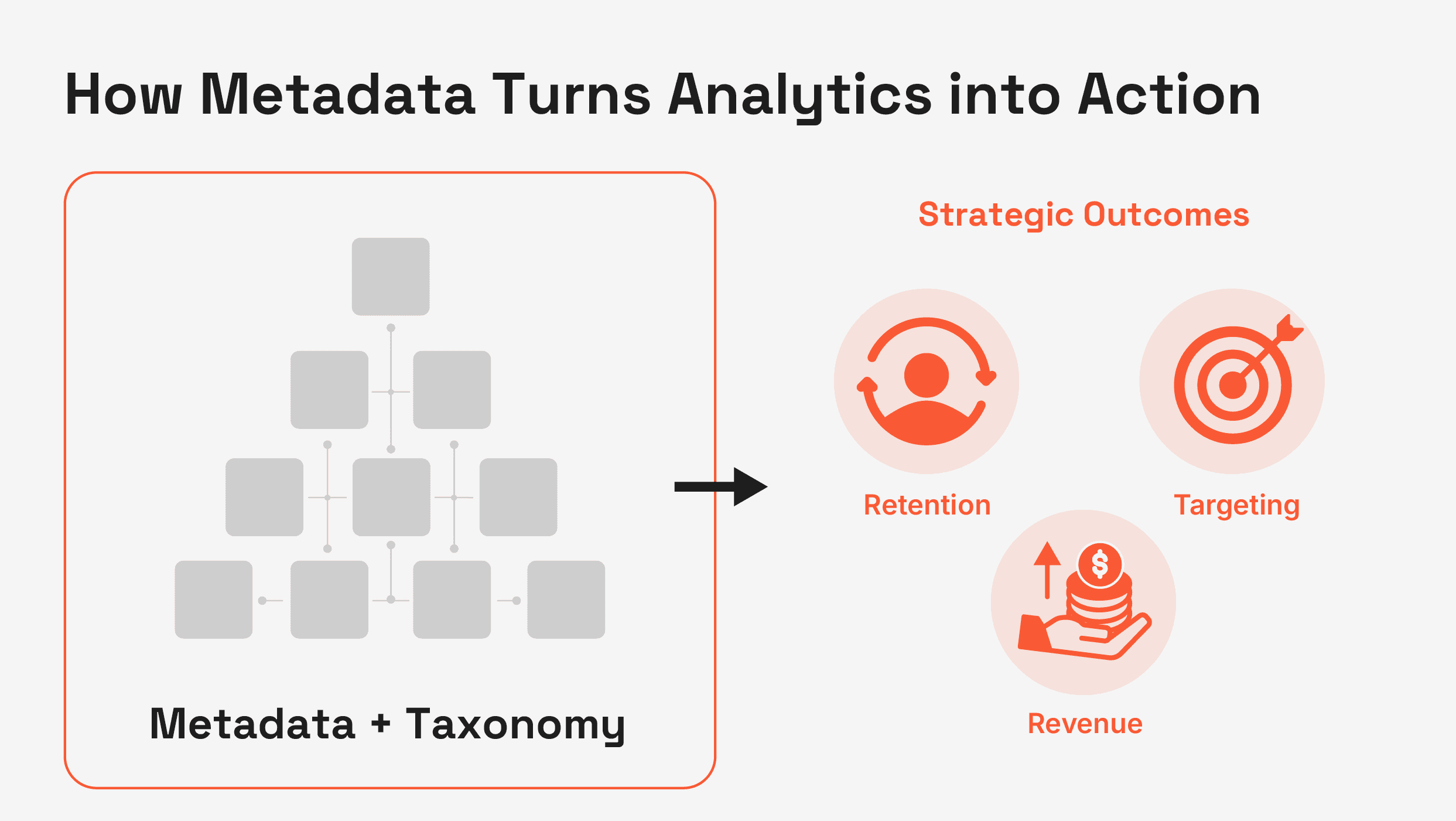
In Part 1, we explored why game analytics needs more than raw behavioral data and how structured metadata brings context and clarity to complex decisions.
In this second part, we dive into how Gameopedia’s expert-built metadata and taxonomy framework complements the data you already collect, helping studios, publishers, platforms, and ecosystem partners make smarter, faster, and more aligned decisions.
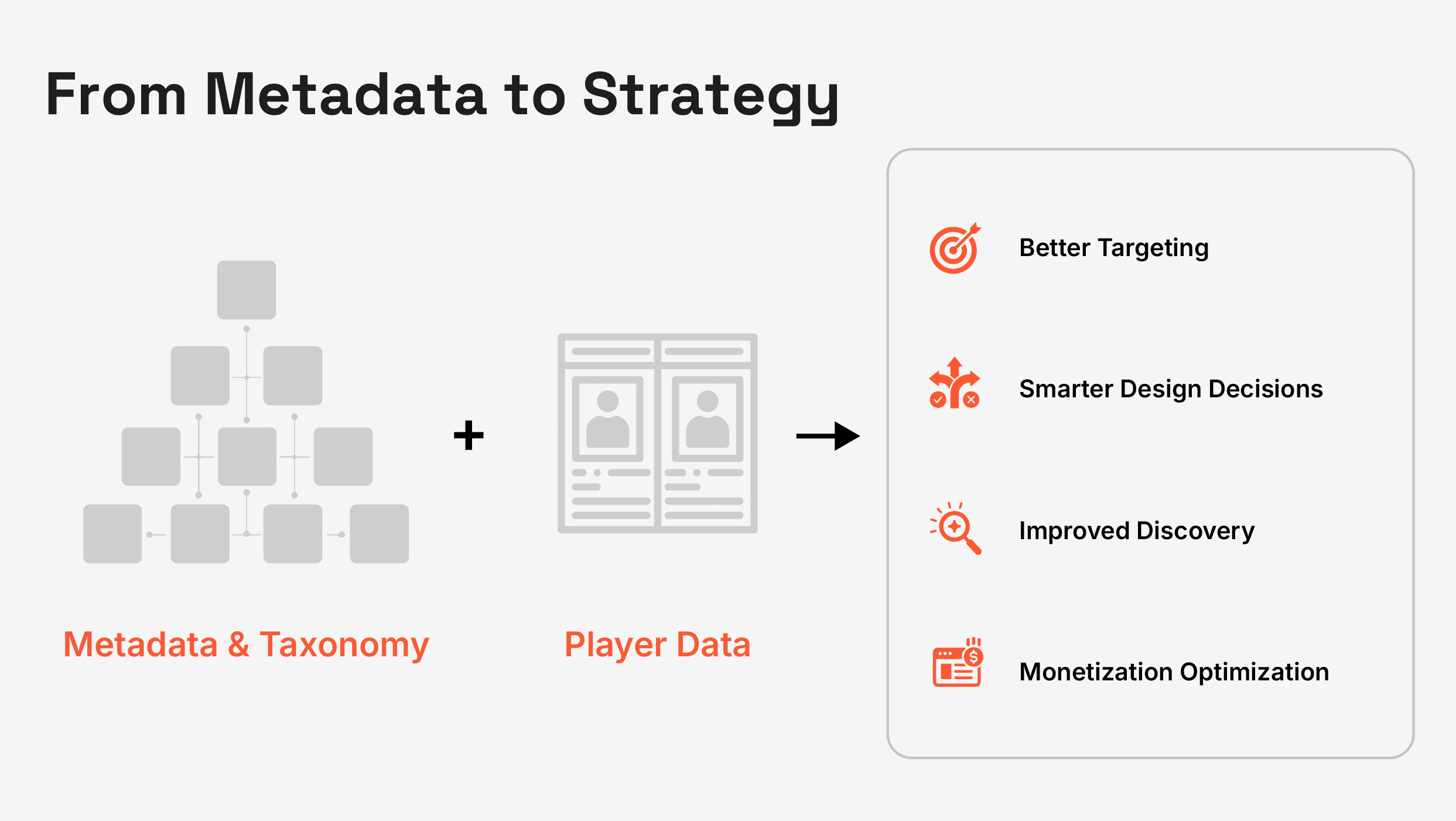
Game Intelligence = Gameopedia’s Metadata and Taxonomy + Player Data Analytics
Gameopedia’s proprietary metadata and taxonomy are the connective tissue that gives your data structure by organizing it into clear, actionable categories, including:
Genres & Subgenres: Get clarity into market saturation, audience preferences, and as yet untapped categories.
Game Mechanics & Features: Identify game elements that correlate with player engagement or churn in your own data.
Narrative & Themes: Map storytelling devices to audience sentiment and emotional response.
Monetization Models: Contextualize revenue data using metadata on how games structure payments or ads.
Player Motivations & Vibes: Explore how emotional tone and gameplay depth align with audience segments.
What separates Gameopedia’s metadata and taxonomy from the crowd is that — unlike crowdsourced or auto-tagged metadata — our taxonomy is built by experts whose sole job is to understand games in depth. Our game taxonomists undergo rigorous training, and it’s usually six months of onboarding before they’re even allowed to edit our games database. This structured, consistent lens enables more meaningful analysis, better recommendations, and smarter decisions across the board.
Real-World Applications of Metadata-Powered Insights
Studios, publishers, content platforms, and tech ecosystems all benefit from combining metadata with behavioral analytics:
A. Game Studios
Optimize engagement, retention, and monetization strategies by aligning internal playtest data with structured metadata and taxonomy.
B. Publishers and Distributors
Plan smarter launches, personalize campaigns, and benchmark competitors using both our metadata and taxonomy as well as internal data.
C. Content Platforms and OEMs
Power smarter discovery, search, and personalization through our metadata and taxonomy tagging across catalogues.
D. AdTech and Marketing
Use metadata and taxonomy to build better audience targeting strategies so that you can recommend games by vibe, theme, or specific tropes.
Beyond Games: How Metadata and Taxonomy Powers Tech, Media, and Marketing
While studios and publishers are the most obvious users, metadata also drives value wherever games intersect with other media. Fallout 4 spiked in popularity when Amazon launched the tv series, Star Wars Battlefront II saw a surge after Andor on Disney+; and Fortnite has blurred boundaries entirely with concerts and in-game story drops tied to upcoming film releases.
In all these cases, metadata and taxonomy provide the connective tissue: mapping themes, franchises, and vibes across mediums. For streaming services, OEMs, and ad networks, that means smarter targeting and the ability to sync campaigns with cultural moments as they happen.
Streaming Services: Improve search and discovery by enriching catalogs with nuanced game metadata and taxonomy.
OEMs and Smart TVs: Use metadata and taxonomy to power app-store-level filtering and voice-search accuracy.
Ad Networks and DSPs: Tap into thematic and gameplay-driven tagging for precise campaign targeting.
A recent report by LG Ads shows how detailed metadata — including game-related attributes — can help media buyers connect more effectively with franchise fans. By layering structured intelligence onto their smart TV ecosystem, they’re able to run more targeted campaigns and boost audience engagement.
Common Analytics Challenges Metadata and Taxonomy Help Solve
Without structured metadata, even the most sophisticated behavioral data systems run into issues like:
Data Fragmentation: Disconnected datasets that can’t be cleanly compared, can lead to false insights and mistakes
Surface-Level Insights: The scourge of metrics sans meaning (what does “low retention” really mean without context?)
Strategy Misfires: Decisions made without understanding the game itself lead to misaligned launches, features, or campaigns
Gameopedia’s structured metadata and taxonomy transforms these limitations into opportunities for clarity and confidence.
How Gameopedia Enables Next-Level Gaming Intelligence
Here’s what makes our metadata system stand out:
Comprehensive Coverage: 22,000+ attributes listed across 100,000+ unique titles.
Structured Taxonomy: Designed for ease of machine and human use across ecosystems.
Constant Updates: Reflect the evolving state of game development, design and player experience.
The Bottom Line: Metadata Makes Game Analytics Work Harder
Game analytics isn’t just about player behavior dashboards or retention curves. It’s about turning raw information into real decisions that drive tangible results.
Gameopedia’s metadata gives studios, platforms, and ecosystem players the structure and context they need to go from insight to impact.
Ready to bring structure to your game analytics and unlock smarter decision-making?
I’m a Senior Content Writer at Gameopedia, where I explore how games, data, and culture intersect. When I’m not writing about game discovery and player insights, you’ll probably find me on a motorcycle, at a quiz, or in a book.