


The Retro Game: Nostalgia and Reinvention
Ibrahim Nabeel
Assistant Manager - Game Taxonomy
@Gameopedia
Read Time :
10 minutes

There's a moment every retro gamer knows. You're halfway through a level in Shovel Knight or Celeste, the chiptune soundtrack is doing something quietly devastating in your headphones, and you realize you're not just playing a game. You're being reminded why you play games at all. That feeling is part nostalgia, part craft, and entirely earned.
Modern retro gaming is having more than a moment. It's having a decade. And if you want to understand why, or find the best retro games to play, buy, or add to your collection today, this is the guide for you.
What Is a Retro Game?
There's no single agreed-upon definition, but a retro game is broadly understood to be a video game from an earlier generation of computing or console hardware, typically fifteen to twenty or more years old. What actually makes a game feel retro, though, is less about age and more about what it evokes.
Retro games are characterized by outmoded hardware, nostalgia-evoking mechanics, and often feature iconic 8-bit or 16-bit pixel art.
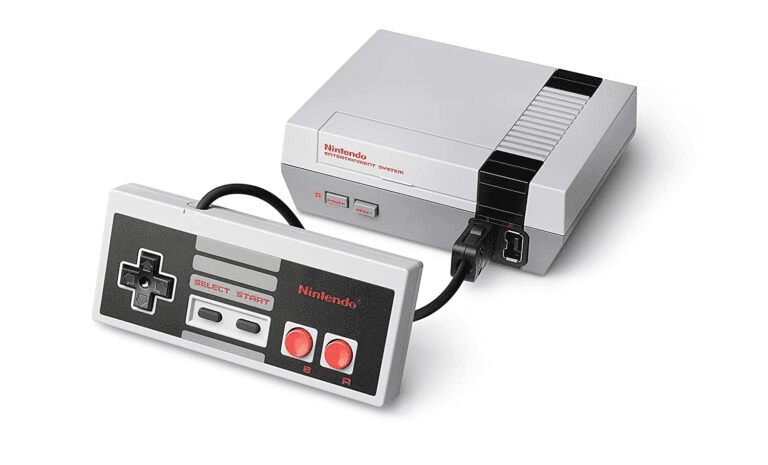
For most gamers today, the classic era is the 8-bit and 16-bit period: the third and fourth generations of home consoles, roughly 1983 to 1995. This is the golden age of the NES (Nintendo Entertainment System), the SNES (Super Nintendo), the Sega Genesis, the Game Boy and GBA, and the golden age of arcade gaming, including Pac-Man, Galaga, and Street Fighter II. It's also the era of home computers like the Amiga and Amstrad CPC, which had their own distinct libraries of classics.
The average gamer today is around 35 to 37 years old. Many of them got their first taste of gaming on these very systems. They have more disposable income than younger players, and they spend it on games, accessories, consoles, and the memories that come with them.
But nostalgia alone doesn't explain why a 22-year-old in 2025 has strong feelings about a game that came out before they were born. That requires a different conversation.
Why Classic Games Still Matter
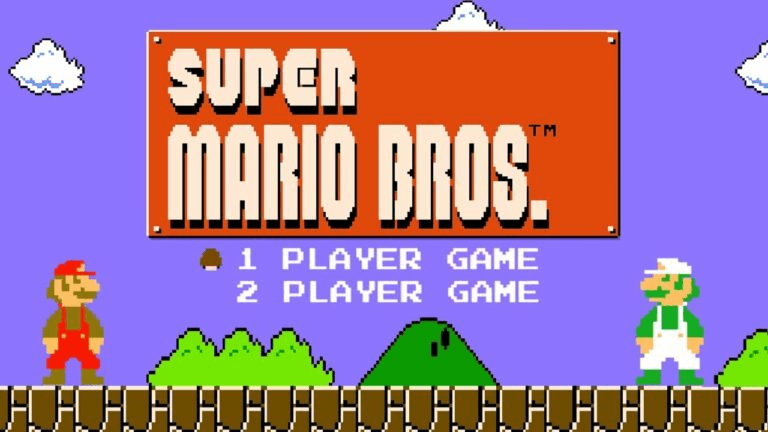
The NES didn't just produce fun games. It saved an entire industry. After the video game crash of 1983 nearly killed consumer gaming in North America, Nintendo's NES brought it back, introducing instant classics like Super Mario Bros. (1985) and The Legend of Zelda (1986), both of which launched franchises still running today. Super Mario Bros. 3 is still considered one of the finest platformers ever designed. The Legend of Zelda: Ocarina of Time, which arrived in the N64 era, is routinely cited as one of the greatest video games ever made.
Chrono Trigger, released on the SNES in 1995, is often regarded as the best RPG of all time, praised for its innovative gameplay, branching story, and timeless art style. These aren't just nostalgia picks. They're genuinely excellent games that hold up, and they've shaped almost everything that followed.
What Is a Modern Retro Game?
A modern retro-style game deliberately recreates the look and feel of 8-bit and 16-bit era games while introducing design innovations made possible by modern tools and contemporary perspectives. Think of it as a loving, technically sophisticated homage rather than a knockoff.
The key ingredients:
Pixel art aesthetics faithfully inspired by NES, SNES, or Genesis hardware constraints (limited color palettes, tile-based graphics)
Chiptune music that sounds like it was composed for a Yamaha YM2612 or Ricoh 2A03 sound chip
Classic gameplay mechanics including tight controls, lives systems, and challenge-based progression updated with modern quality-of-life features
Innovative design layered on top, doing things those old consoles genuinely couldn't do
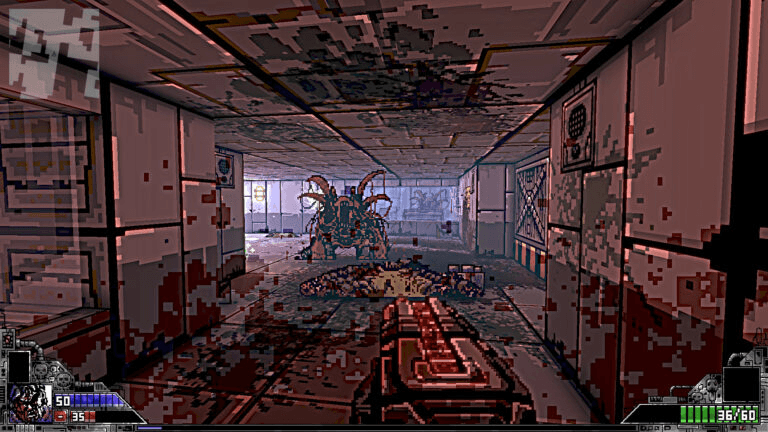
There are some interesting exceptions to the 2D aesthetic. Project Warlock (2018) and Ion Fury (2019) are both inspired by early 3D FPS games, specifically Doom (1993) and Duke Nukem 3D (1996), and both capture that era's frantic, corridor-blasting energy with impressive fidelity.
Modern retro gaming is also enhanced by emulators, which are dedicated software applications that let you play classic games from NES, SNES, N64, GBA, and other consoles on modern devices like smartphones and PCs. Many emulators support save states, configurable on-screen controls, and gamepad compatibility, though they typically require users to supply their own ROMs. For players who want a plug-and-play experience without the legal grey areas, a growing number of retro game stores now stock over 10,000 vintage games, classic consoles, and gaming accessories, often with warranties included and free shipping on orders over a certain threshold, and these stores increasingly rely on high-quality game content and taxonomy to surface the right titles.
A Brief History of Modern Retro Gaming
The 2000s: Indie Developers Fill the Void
The rise of modern retro gaming is inseparable from the history of indie game development, and from broader shifts in how digital marketplaces handle game discoverability.
In the 2000s, major studios were in a full sprint toward photorealistic 3D, foreshadowing today's broader issue of industry complexity and fragmented understanding of game content and the need for data-driven market research for game studios. The 3D worlds pioneered by id Software and Epic Games became the industry standard, and AAA publishers largely abandoned the game genres that had defined the '80s and '90s. As Sam Roberts, director of the indie game festival IndieCade, has noted, this "single-minded" pursuit of high-resolution, photorealistic graphics created a vacuum, and indie developers stepped into it.
The moment that proved it could work came in 2004, when a single developer named Daisuke "Pixel" Amaya released Cave Story, a 2D platform adventure he'd built over five years, mostly in his spare time. The game was a genuine critical success, praised for its polished design and its affectionate tribute to classic franchises like Metroid, Mega Man, Castlevania, and The Legend of Zelda. It demonstrated that the demand for retro gaming experiences was real, and that indie developers had the craft to meet it.
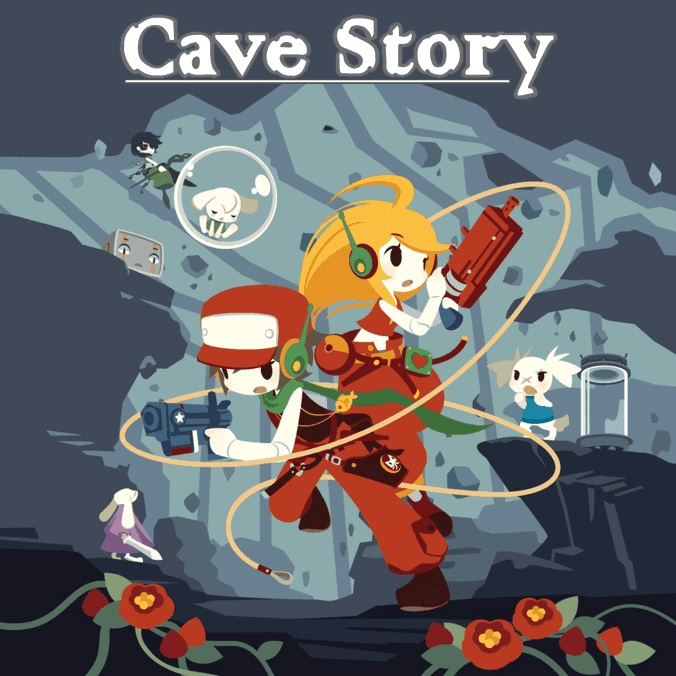
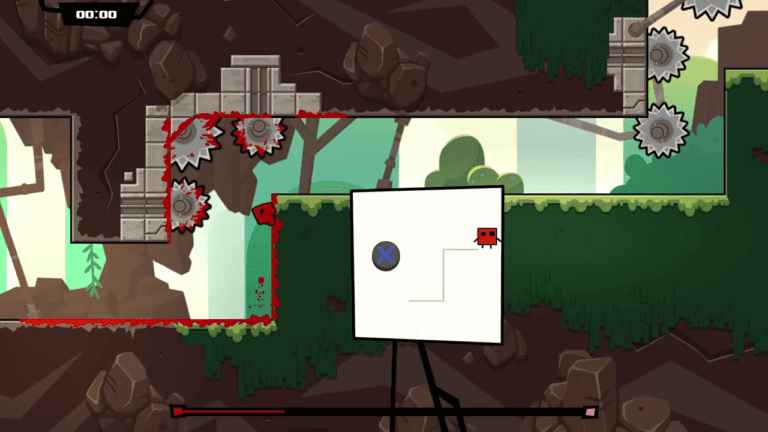
Cave Story was followed by Braid (2008), Super Meat Boy (2010), and Terraria (2011), all of them indie titles harkening back to 2D design. In 2008, Microsoft's Summer of Arcade promotion brought Braid and Super Meat Boy to a mainstream Xbox Live audience. Indie games had left their niche.
The 2010s: Going Authentically Retro
The early indie wave had distinctive aesthetics but didn't necessarily look retro, and it predated the kind of granular genre taxonomy that now helps define and distinguish subgenres. That changed in the 2010s, when new techniques allowed developers to create an authentic vintage appearance with accurately limited color palettes, scanline effects, sprite flicker, and the rest.
The watershed moment was Shovel Knight (2014). Made by Yacht Club Games with a custom engine, Shovel Knight was so accurate in its recreation of the NES aesthetic that some players genuinely believed it could run on original hardware. (The developers had to clarify otherwise.) It became a reference point for the entire genre, proving that you could be rigorously faithful to a classic visual style while making something entirely new.
By the mid-2010s, a wave of games followed its lead: Undertale (2015), Enter the Gungeon (2016), Sonic Mania (2017), Celeste (2018), The Messenger (2018), Bloodstained: Curse of the Moon (2018). Each found a substantial audience, earned critical recognition, and helped cement retro-inspired gaming as a permanent, thriving segment of the industry rather than a niche curiosity, now tracked in comprehensive video game databases used across the industry.
Why Are Modern Retro Games So Popular?
Nostalgia is part of it, but only part.
A video game is uniquely capable of evoking nostalgia because it's immersive in a way that films and music aren't. You don't just watch a retro game; you inhabit it. Revisiting a cherished virtual world from your childhood is a deeply personal experience, and the best retro games understand this.
But nostalgia can't fully explain why players who weren't alive in 1992 are buying and loving these games in large numbers. The other reasons are more interesting.
Elegant simplicity. A retro game's core mechanics are almost always immediately legible. The concept of extra lives, the drive to beat a level, the tight feedback loop of fail-and-retry: these are easy to understand and genuinely satisfying to master. Modern AAA games, for all their technical achievement, can overwhelm players with cutscenes, branching storylines, sprawling open worlds, and 40-hour campaigns. According to The Independent, 90% of players never finish modern games. Retro games don't have that problem. You can pause, pick them back up, and always know what you're supposed to be doing, especially when platforms invest in structured, gaming-native metadata for better search and recommendations.
An alternative to toxic multiplayer culture. Contemporary competitive multiplayer gaming is built around domination: kills, rankings, humiliation. The couch co-op games of the '80s and '90s were built around fun. Modern retro games that revive that cooperative spirit offer something genuinely different, a way to play with other people without the stress of it mattering.
Trendiness among younger players. The pixel art aesthetic that defined classic games now reads as stylish, not dated. Younger players are drawn to it for the same reason they're drawn to vinyl records or vintage clothing: it's a reaction to the relentless churn of the new, and a genuine appreciation for craft that doesn't rely on polygon counts.
The Best Modern Retro Games to Play Today
These are the games that define the genre, each one available across multiple platforms, often at a fraction of the cost of a new AAA release, and they benefit enormously from rich, standardized metadata that describes what they actually are.
Shovel Knight (2014)
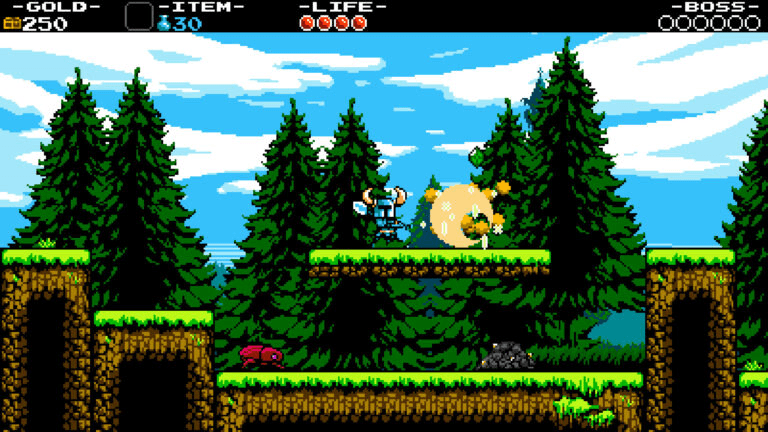
If you play one retro-inspired game in your life, make it Shovel Knight.
Yacht Club Games didn't just create a game that looks like an NES classic. They created one with the depth and design sensibility to deserve to be called one. The art style is so faithful that the developers restricted themselves to the exact color palette available on NES hardware. The parallax scrolling, where background layers move at different speeds to suggest depth, is technically perfect. The chiptune soundtrack is widely regarded as one of the best in gaming, retro or otherwise.
The game pays homage to Zelda II: The Adventure of Link, Castlevania, Super Mario Bros., and the Mega Man series, specifically borrowing Zelda II's iconic downward thrust move. But it makes one sharp modernizing choice: rather than sending you back to the beginning of a level when you die, it docks you gold instead. The difficulty is classic; the punishment is more forgiving.
The crowdfunded game has since sold 2.5 million copies and is now considered one of the greatest games ever made, retro or otherwise. It's available on basically everything, and the base game plus its expansion packs (Plague of Shadows, Specter of Torment, King of Cards) make it exceptional value.
Undertale (2015)
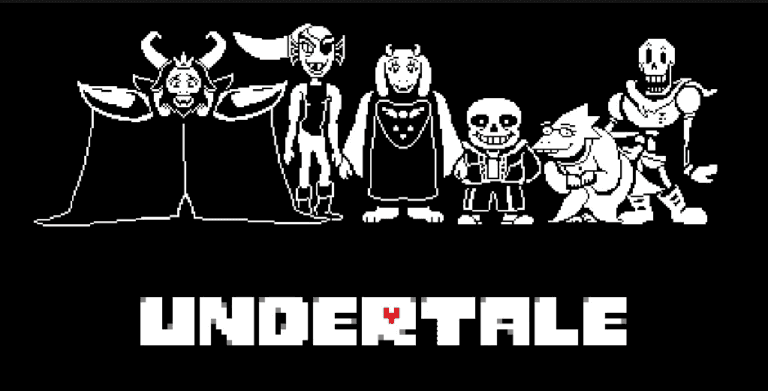
Undertale was made almost entirely by one person, designer and composer Toby Fox, and in 2015 it went toe-to-toe with The Witcher 3 for game of the year honors at numerous publications. It won many of them.
The game uses an 8-bit aesthetic similar to Shovel Knight but plays entirely unlike any classic game, or any contemporary one. You can choose whether to kill or spare every enemy you encounter, creating three distinct playthroughs: pacifist, neutral, and genocide. The game doesn't lock you out of content; it unlocks different content depending on your choices. One of gaming's most beloved boss fights, paired with one of gaming's most beloved tracks, is accessible only in the genocide route.
Undertale is also the most streamed video game soundtrack on Spotify, which tells you something about how deeply it's gotten under people's skin. It's made $26.7 million from Steam sales alone and remains a top-selling indie title on the Switch. The fact that it was built by one person, with 8-bit tools, makes it all the more remarkable.
Celeste (2018)
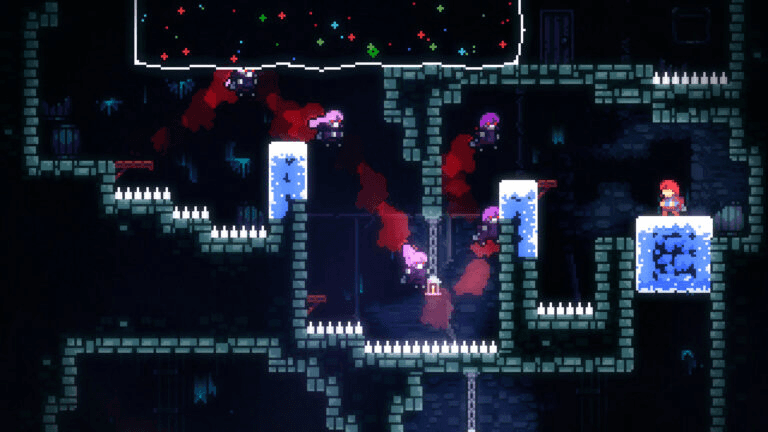
Celeste uses the visual language of a retro platformer to tell a story it has no business telling this well.
The mechanic is simple: one mistake per screen, and you restart. There's no skill tree, no leveling up. The game gets harder as it goes. But the difficulty isn't the point; it's the vehicle. You're playing as Madeline, a young woman climbing a mountain while coping with depression and anxiety, and every death is reframed not as failure but as learning. You don't get better stats. You get better.
Celeste's approach to mental health is restrained and genuine, so much so that one player wrote publicly about how the game helped them through suicidal ideation. For a platformer.
By the end of 2019, Celeste had sold over a million copies. It's available on all major platforms and is one of the most critically acclaimed games of the decade.
Enter the Gungeon (2016)
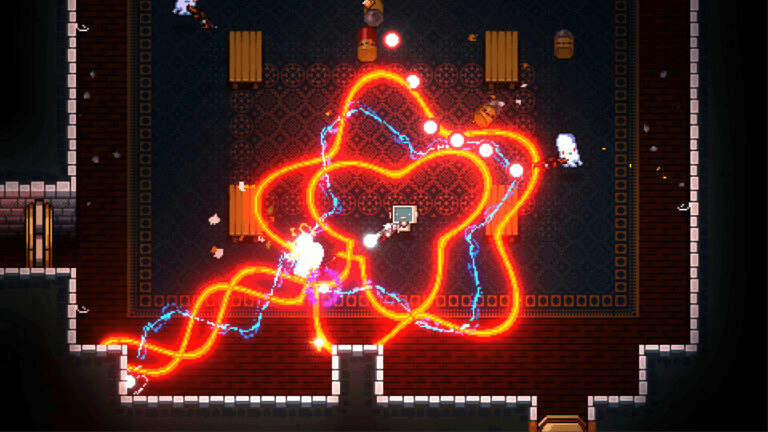
A top-down rogue-like inspired by the bullet-hell shooters of the NES and arcade era, Enter the Gungeon commits fully to its central absurdity: everything is a gun. The enemies are bullets. The dungeon is a gun. The game's procedurally generated levels follow an internal logic that produces genuine variety rather than minor shuffles of the same content, and the sheer creativity of the weapon designs (there are hundreds) gives it near-infinite replay value.
It has sold over three million copies, which makes it one of the most commercially successful titles in the genre. It's also hard, legitimately hard, and there's a robust community of guides and tips for players unfamiliar with the bullet-hell mechanic. That difficulty is part of the appeal. The sense of accomplishment when you clear a chamber is real, especially for players whose tastes align with persona-driven discovery systems that surface challenge-focused games.
Sonic Mania (2017)
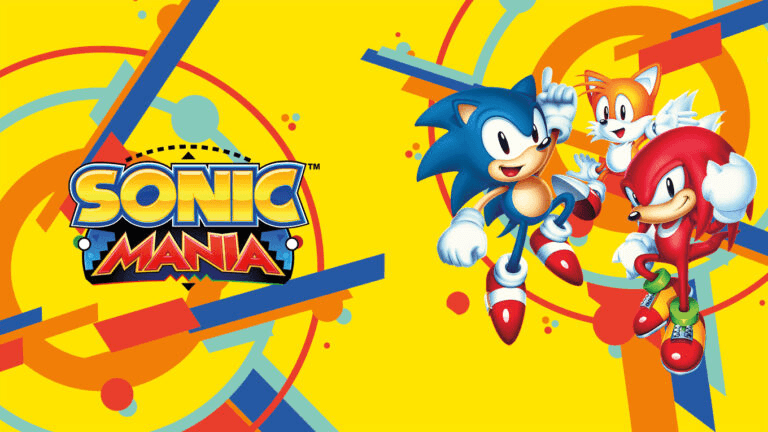
Most modern retro games are made by indie studios. Sonic Mania is the rare case of a major publisher going back to its own roots and doing it right.
Developed by Sega in collaboration with fans of the original games, Sonic Mania is exactly what Sonic needed to be again: fast, momentum-based, visually true to the Genesis aesthetic, and deeply fun. The game lets you play as Sonic, Tails, Mighty, Ray, and Knuckles, each with distinct mechanics. Sonic's new Drop Dash move opens up movement options that feel genuinely fresh while still honoring the original design philosophy.
The soundtrack, a mix of remixed Genesis-era classics and original compositions, is superb. Within a year of launch, the game had sold a million copies. The Sonic franchise had found its footing again, and it found it by looking backward.
The Messenger (2018)
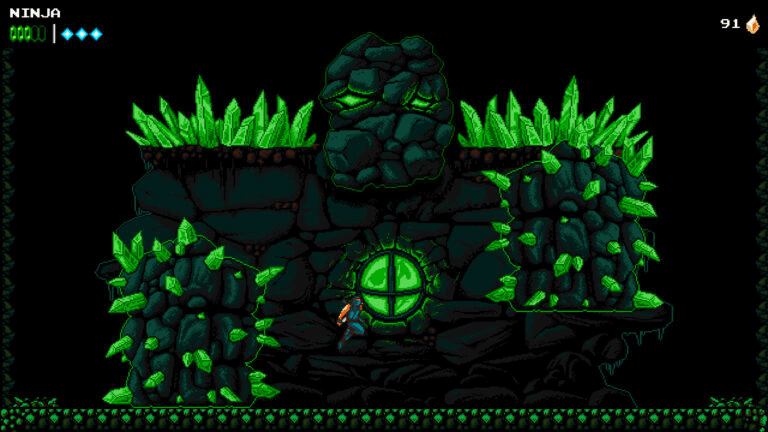
The Messenger starts as an intense linear 2D action game inspired by the classic NES Ninja Gaiden series: tight, fast, demanding. Then it pulls the rug out from under you in one of the cleverest mid-game pivots in recent memory.
Without spoiling too much: the game transforms from a linear action title into a full Metroidvania, a genre defined by guided non-linearity, exploration, and the gradual accumulation of abilities that unlock new areas. It presents its world in both 8-bit and 16-bit styles depending on which time period you're exploring, using the visual shift as a storytelling device. It's witty, mechanically tight, and quietly ambitious.
Bloodstained: Curse of the Moon (2018)
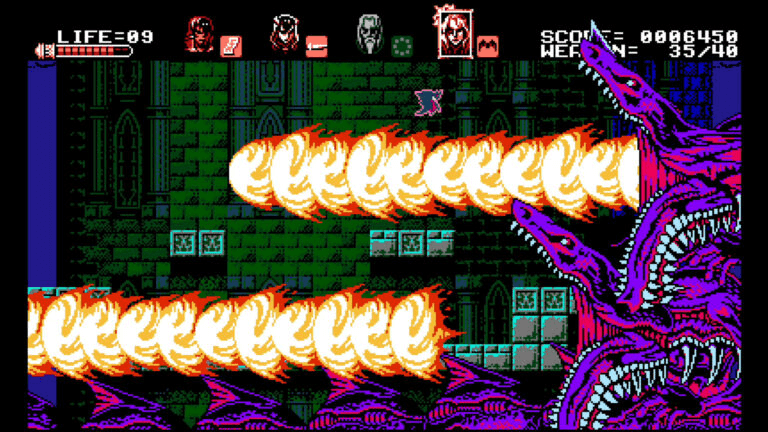
Bloodstained: Curse of the Moon is for Castlevania fans specifically, and for them, it's close to perfect.
The game is a meticulous recreation of the slow, deliberate action of Castlevania III: Dracula's Curse (1989) on NES, including the plodding movement, the gothic atmosphere, and the unforgiving pitfalls. Some reviewers found the pace too close to its inspirations (IGN noted it "walks a fine line between homage and theft"). Others, particularly fans of the source material, found it deeply satisfying.
Where it improves on classic Castlevania is in its difficulty scaling, with enemies introducing new mechanics rather than just gaining more health, and in its multiple routes through its eight stages, which give it strong replay value. The gothic visual design and brooding soundtrack are exactly what the genre requires. It sold over half a million copies within two years of launch.
How to Play and Buy Retro Games Today
You have a few good options depending on what you're after.
Physical retro game stores are the best source for original hardware and cartridges. Many stock over 10,000 vintage games, consoles, and accessories, including items for NES, SNES, Genesis, GBA, and arcade systems. Look for stores that offer product warranties (a one-year warranty is standard at reputable retailers) and check for free shipping thresholds before you order, and for retailers that invest in well-managed video game information on their e-commerce sites.
Digital storefronts like Steam, the Nintendo Switch eShop, PlayStation Store, and Xbox Game Pass carry most of the modern retro titles discussed here, often at very reasonable prices and frequently on sale, and they increasingly depend on specialized video game search and discovery solutions. The Switch in particular has become a home for retro-inspired indie games, and the eShop's sale prices are worth watching, especially in regions where localized game metadata shapes what players see and buy.
Emulators let you play classic games from NES, SNES, N64, GBA, and other systems on modern smartphones and PCs. Features vary by emulator but commonly include save states, on-screen configurable controls, and gamepad support. Note that emulators require you to source your own ROMs, which carries legal considerations depending on your region.
If you use an affiliate link from a retro gaming site to make a purchase, it typically costs you nothing extra. The store pays a small commission, which supports the writers and reviewers doing the work of keeping this community informed.
Conclusion
The best modern retro games succeed not because nostalgia is powerful (though it is), but because their designers understood what made classic games worth missing in the first place. Tight controls. Legible mechanics. Genuine challenge. Music you can hum. A sense that someone cared deeply about every single screen you'd see.
Retro gaming, in its modern form, is a corrective. It's a response to games that cost $200 million to make and feel like they were designed by committee. It's proof that the most innovative thing a developer can sometimes do is look backward with clear eyes and honest craft.
If you're a publisher, retailer, or platform looking to improve how players find and discover games like these, Gameopedia provides custom metadata, taxonomy, and search and discovery optimization built specifically for the games industry, including advanced video game tagging and taxonomy services.
To find out what the right data infrastructure can do for your catalog...
Get In Touch
25+ Years of playing Games with 7+ Years of Industry experience. A Gaming wizard also known as the wise one.