


AAA Games: A Comprehensive Guide
Harish Alagappa
Senior Content Writer
Gameopedia
Read Time :
15 Min

(originally published on Dec. 15, 2021)
This is Gameopedia’s Game Terminology and Taxonomy series, where we talk about the different kinds of game categories and aim to give our audience in-depth knowledge about them. This blog covers everything you need to know about AAA games.
In the gaming industry, the classification of games into categories based predominantly on the games’ budget, scope, and the like can be done into AAA, AA, and Indie games. These classifications are informal and used mostly by game developers and publishers for marketing purposes as well as e-retail portals to categorize game pages. They also provide information to customers about the games’ potential.
While exact figures for all AAA game-related revenue is hard, Free-to-play (F2P) Triple-A games make up for a major chunk of income, with Fortnite: Battle Royale alone contributing a massive $5.1 billion revenue in 2020. AAA title games have always been an eagerly anticipated bunch of releases by gamers around the world. What makes them so significant to the gaming industry though? Let’s dive in.
How Do We Define AAA Games?
We need to start with defining what exactly a AAA game is. Triple-A games are generally classified as those which have a significant budget for production as well as marketing, and which are conventionally developed by major studios and publishers. AAA video and AAA video games are known for their high-budget, high-quality development, involving complex programming and advanced features. As a result of this, these high profile games are expected to be of excellent technical and graphical quality with top notch mechanics, minimal bugs, and high production values. The term came into existence in the 90s. Below are some examples of AAA title games, where we also go into what makes them so. The characteristics we’ve noticed are:
Development budget: These games have a high budget, usually ranging upward of $50 million. For example, The Witcher 3: Wild Hunt had a development budget of $81 million. It is estimated that GTA V cost over $137 million just to develop. Some AAA games have reported massive costs, with budgets between $450 million to $700 million. AAA games are high-budget releases from the biggest companies in the industry, and AAA game development typically involves production budgets ranging from $50 million to over $200 million. AAA titles receive financial backing from mid-sized to major publishers like Ubisoft, EA, or Activision.
Team size: The production teams for AAA title video games are huge, with at least 50 to 100 employees working on it. For instance, at Ubisoft, AAA game development involved 400 to 600 staff for open world games, split across multiple locations and countries. The development team for AAA games often consists of hundreds of people, and the size and composition of the development team significantly impact project costs and timelines.
Game scope: These games usually have several features and modes and are narrative based.
Genres: Action, Adventure, Shooter, RPGs, and Sports are the most commonly seen genres.
Graphics quality: They are expected to be high quality and have the latest in graphics technology such as real-time ray tracing, particle effects, and detailed textures.
Technology usage: They tend to use the latest technologies like game engines, custom development tools, and more. These studios often develop their own proprietary game engines, such as Epic Games’ Unreal Engine and use expensive technologies like motion capture to render gorgeous cinematics and smooth character movement. These games are made for newer generations of consoles and a higher calibre of PCs. AAA games are crafted by top industry professionals utilizing cutting-edge technology, which sets them apart in the gaming market. Modern AAA titles push boundaries of realism using engines like Unreal Engine 5 and advanced ray tracing.
Marketing push: Marketing budgets can also be similar to or even higher than the development cost. An example would be Final Fantasy VII, which cost around $45 million to make, and had a U.S. marketing budget of around $100 million, back when it was released in 1997. Marketing often focuses on generating hype for the game through a large number of campaigns, sponsorships, collaborations, and the like. An example would be Madden NFL 2002 buying Super Bowl ads. Beautiful cinematic trailers and bonuses on pre-orders are other ways these games have improved marketing. Sometimes, developers decide to keep certain details under wraps to build anticipation and maximize marketing impact. AAA games target a broad, mass-market audience through global advertising and digital storefronts.
Level of game polish: Triple-A games should ideally be well polished and have a small number of glitches or bugs due to the large number of people working on it and budget. Hiring famous and established voice actors and character models is a well-established process for these games. AAA games often feature massive scripts and professional voice acting for emotionally impactful narratives.
Franchise release: These games are usually intended to become a franchise post-success. For example, Skyrim, Dragon Age Inquisition, and FIFA. The first game in a franchise often sets the foundation for future titles.
Studio size and whether they’ve made AAA titles before: These games are usually made by large, established studios or talent experienced in making them.
Higher threshold for success: Ideally these games sell upward of 2~ million copies to break even if not be profitable, though this depends on their total budget. When The Witcher 3: Wild Hunt launched in 2015, it sold nine million units that year. In May 2020, the developing studio CD Projekt Red announced it had sold 50 million units in a tweet.
The creation of AAA games involves managing large teams, delivering key milestones, and making critical decisions about project scope and marketing strategies. The process requires significant money, with massive investments and the potential for substantial profits.
AAA games often rank as blockbusters due to their extreme popularity and high production values. AAA games important: they set industry trends, drive technological advancements, and continue to grow in relevance, especially as high-performance hardware becomes more common in both console and mobile gaming platforms.
When comparing AAA, AA, and indie games, it's important to note that AA games are created by mid-sized studios with budgets between $5 million and $50 million, while indie games are typically developed for under $5 million and often cost less than $1 million. Indie games prioritize creative freedom and innovation over photorealistic visuals.
Let’s look at an example.
Destiny 2
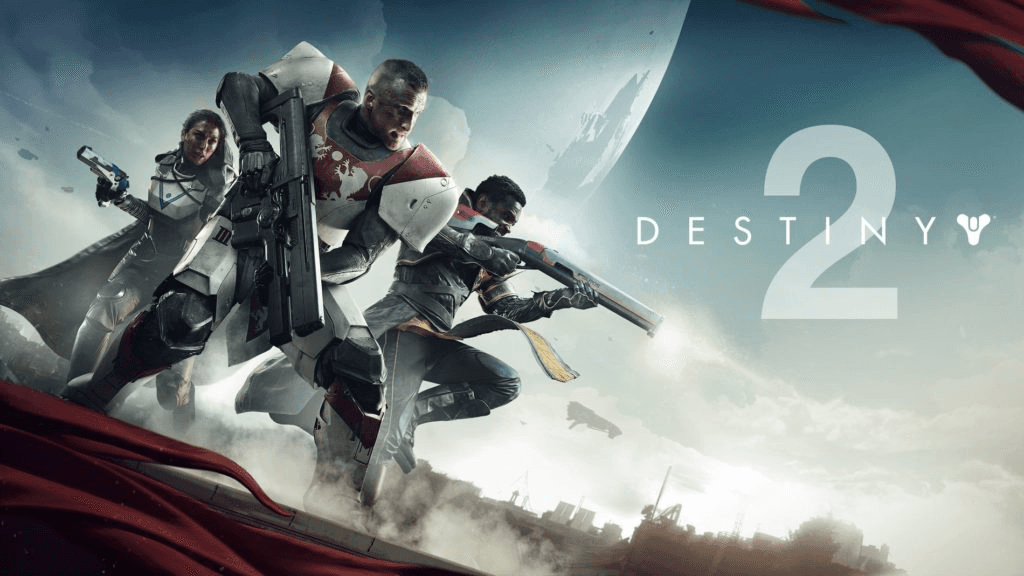
Development budget and marketing push: According to Activision Blizzard’s CEO, it costs $500 million to develop and market Destiny games. The creation of Destiny 2 involved extensive craftsmanship and high production values, with a large team working to deliver a captivating and immersive game world.
Team size: For Destiny, according to Butcher, the game’s lead engineer, “If you count all of the test and development and support staff then we’re over 400 people.” Destiny 2 has at least that many if not more, considering the new content they keep releasing.
Game scope: The game features a multiplayer “shared-world” environment with elements of role-playing games. Like the original, activities in Destiny 2 are divided among player versus environment (PvE) and player versus player (PvP) game types. There have been several massive expansions as well, with the latest being new Halo guns being released as a reward as Bungie celebrates their 30th anniversary. The development team worked to deliver these expansions and updates on schedule, ensuring players received new content regularly.
Genres: It is a free-to-play online-only multiplayer first-person shooter video game released in 2017. It was originally a pay-to-play release but in 2019, was made F2P.
Critical reception: Destiny 2 received “generally favorable” reviews, according to review aggregator Metacritic. Its gameplay and story were both highly praised by several reviewers and publications. It was nominated for and won Best PC Game of 2017 at the Game Critics Award. As with many AAA games, Destiny 2 achieved blockbuster status due to its extreme popularity and high production values.
Graphics quality: The game’s graphics and gameplay were both highly praised by publishers.
Technology usage: It was released for the latest generation of consoles available then (the PlayStation 4 and Xbox One) as well as Windows, though you would need a mid to high range PC to properly play the game. Later, when Google Stadia was released, Destiny 2 was re-released as an F2P game by Activision across all platforms. It has recently been upgraded for the new generation of consoles (the PlayStation 5 and Xbox Series X/S) as well. AAA games like Destiny 2 are crafted by top industry professionals utilizing cutting-edge technology, which sets them apart in the gaming market.
Level of game polish/number of bugs: Destiny 2 was relatively free of game-breaking bugs and came well-polished. The game’s frequent patches and updates tend to ensure this is consistent.
Franchise release: This game is a part of the Destiny franchise, with similar gameplay elements and lore.
Studio size and whether they’ve made AAA games before: Bungie, the studio behind Destiny 2, is also responsible for creating the famous Halo franchise.
Threshold for success: In 2017, post-release, Bungie shared that millions of people had played Destiny 2, with as many as 1.3 million doing so at the same time. It was also the second highest-grossing console game of 2017 in North America, and was Activision’s biggest PC release based on units sold. Activision also said that Destiny 2 set a day-one sales record on the PlayStation Store.
Why are AAA Titles Important?
AAA games are vital as they historically have driven the industry and pioneered innovation. An example of this are the Triple-A titles produced during the late 1990s and early 2000s. They brought a shift towards more narrative-driven games that mixed storytelling elements with gameplay. With larger budgets, developers found new innovative ways to present narrative as a direct part of gameplay rather than as pre-rendered cutscenes. Half-Life was one of the first of these new narrative games to nearly eliminate cutscenes in favor of interactive storytelling mechanisms.
AAA title games are likely to continue in this manner. They offer recognition to their production and development teams, helping studios become industry leaders through extensive marketing and brand visibility. These games create opportunities for innovation and growth, both in technology and creative design. Epic entertainment experiences attract large audiences, and access to new technology fosters major innovations. Additionally, AAA games are increasingly being incorporated into mobile gaming platforms, requiring powerful hardware for optimal performance and expanding their relevance. Games and gamers will continue to evolve, but the scale and scope of Triple-A will continue to be vital to provide amazing opportunities.
History of the AAA Game Industry
The term “AAA” started to be heard frequently in the late 1990s, when a few development companies started using the expression at gaming conventions in the US. The term was borrowed from the credit industry’s bond ratings, where “AAA” bonds represented the safest opportunity most likely to meet their financial goals.
One of the first aaa video games that was developed at a Triple-A scale was Squaresoft’s Final Fantasy VII in 1997, which cost an estimated $40–45 million (post adjustment for inflation, $64–73 million) to develop, making it the most expensive video game ever produced up until then. It had unprecedented cinematic CGI production values, movie-like presentation, orchestral music, and innovative blend of gameplay with dynamic cinematic camerawork. Its expensive advertisement campaign was also a novel venture for a video game.

This spurred on future AAA title releases to have a strong emphasis on innovation and narrative-driven gameplay set amidst state-of-the art graphics. AAA games are high-budget releases from the biggest companies in the industry, often requiring substantial development costs and complex programming to deliver high performance and advanced features.
This spurred on future AAA title releases to have a strong emphasis on innovation and narrative-driven gameplay set amidst state-of-the art graphics.
The Most Famous AAA Studios
Now that we’ve examined what exactly makes a AAA game, here are some of the most beloved and prominent Triple-A studios with their popular releases. This isn’t an exhaustive list by any means — it is just meant to provide you with an idea of what kind of studios develop and publish these games. The Sims, Call of Duty, FIFA / EA FC, and Red Dead Redemption are examples of AAA game franchises that have achieved massive success.
Square Enix (Final Fantasy, Tomb Raider)
Ubisoft (Assassin’s Creed, Far Cry)
Riot Games (League of Legends, VALORANT)
Rockstar Games (Grand Theft Auto, Red Dead Redemption)
Nintendo (Mario, Pokemon)
Activision (Overwatch, Call of Duty)
EA (FIFA, Battlefield, The Sims)
Bethesda (The Elder Scrolls, Fallout)
Capcom (Resident Evil, Street Fighter)
Sony Interactive Entertainment (God of War, Gran Turismo)
Prominent Genres and Trends of AAA Games
In one of our prior articles, we explored genre trends in the console market across the past five years for AAA, AA, and Indie releases. This graph below showcases the major variations in genre trends across the last five years related to Triple-A games.
AAA Genre Trends
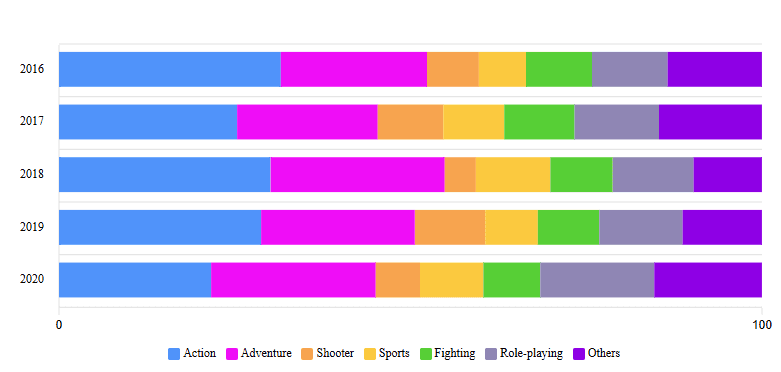
You can see that two genres feature consistently at the top every year – Action and Adventure. Some of the popular aaa games belonging to these two genres over the past five years include Uncharted 4: A Thief’s End (Action, Adventure), Red Dead Redemption 2 (Adventure), and Call of Duty: Black Ops Cold War (Action, Shooter). Red Dead Redemption 2 and Call of Duty are not only popular aaa games but are also considered among the best aaa games, known for their stunning graphics, compelling stories, and dedicated fanbases.
Some of the most well-received Role-Playing Games of the past five years are all AAA titles. These include Final Fantasy VII Remake (Role-Playing) and Assassin’s Creed Odyssey (Role-Playing, Adventure).
Sports games have been consistently popular with AAA publishers as well. There’s a reason for this: licensing costs for these sports leagues go into hundreds of millions of dollars and only AAA studios can really foot this hefty bill.
There are a few annual sports franchises – FIFA / EA FC, NBA 2K, Madden NFL, and NHL – which make up for the bulk of sales and media attention each year.
Players often visit expansive game worlds and online communities within these best aaa games, further boosting engagement and fostering vibrant fan communities..

Franchises
Quite often, AAA title games are intended to be a series of games under a similar title or set in the same universe. Popular characters come back and/or are referred to, and the storyline may continue. The technical definition of a video game franchise would be an iterative series of game products developed around a demand for the services/value of the intellectual property. Once a new single and unique game is released and copyrighted, the brand is established with the first game serving as the IP’s basis of design and definition.
AAA titles are unique amidst other game types because they are developed often with the intention of being a franchise. The massive investment these games require means that they become franchises if the initial game is successful. When publishers decide whether to continue or end a franchise, they consider sales, player reception, and long-term brand value. An example of this not occurring would be Kingdoms of Amalur: Reckoning. This was an action RPG game released in 2012 with a sequel planned, developed by 38 Studios and Big Huge Games. The studio secured a $75 million loan guarantee from the economic development board of Rhode Island for establishing 38 Studios within the state and promoting job growth. The initial sales within the first three months post-release were around 1.3 million. Though impressive, Rhode Island recognized that the title was expected to have hit 3 million units by this point for 38 Studios to pay back the loan.
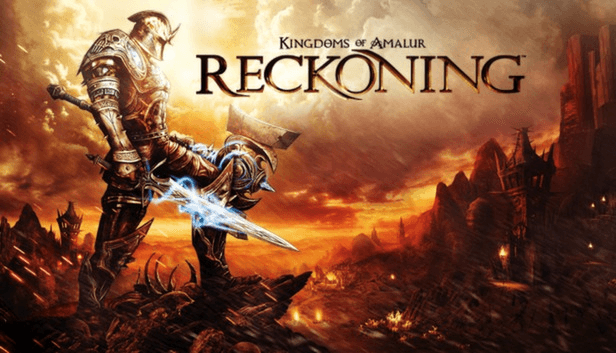
38 Studios defaulted on one of the loan repayments, leading to a publisher to pull out of a US$35 million investment in a sequel. The studio managed to make the next payment, but could not make payroll or other expenses, and shortly later declared bankruptcy by May 2012. On the contrary, games like Call of Duty, FIFA, and the like, once successful initially, have continued being a great source of revenue for their developers and publishers, who are constantly managing these franchises to ensure ongoing success and player engagement. In multiplayer franchises, player reception and sportsmanship — such as saying "good game" at the end of a match — also contribute to the positive reputation and longevity of the series.
Publishers like going for franchises because they already have a dedicated fanbase who would be interested in the game beforehand and this increases copies sold. It is also easier to build upon a pre-existing universe and lore. The most successful video game franchises have been made by AAA developers and publishers and remain popular till date because they have developed a large audience over time while maintaining a reasonable quality to their products to keep their players happy.
The Future of AAA Games
The Future of AAA Games
When AAA games started out, the focus was on pushing out innovative single-payment games with great narratives, gameplay, and state-of-the-art graphics. However, with budgets being so high for these games, they had to think out of the box to beat their competition and make a profit. One of the major ways they did this was after the release of the 7th generation consoles. Along with the internet capabilities of that time, these studios were now capable of releasing optional post launch content for games. Games received bonus content in the form of DLCs, which added new areas, quests, and storylines for the player to enjoy. Studios could now deliver new content and updates directly to players, keeping games fresh and engaging.
A lot of AAA games these days follow the GaaS- games as a service. GaaS is a business strategy while F2P is a revenue model. The most successful AAA titles which use this model ensure that they are transparent about what players get by buying a subscription or season pass, and that this is more than the cost of entry. Another thing to note when it comes to GaaS games is how they manage tie-ups and sponsorships. Whether it is Valorant’s Zedd x Valorant series of gun skins or Fortnite’s various collaborations with movies, shows, and musicians, they capitalize on several fanbases to sell add-ons to their players that make them happy. Managing live services and ongoing content is crucial for these studios to keep players engaged and maintain a steady revenue stream.
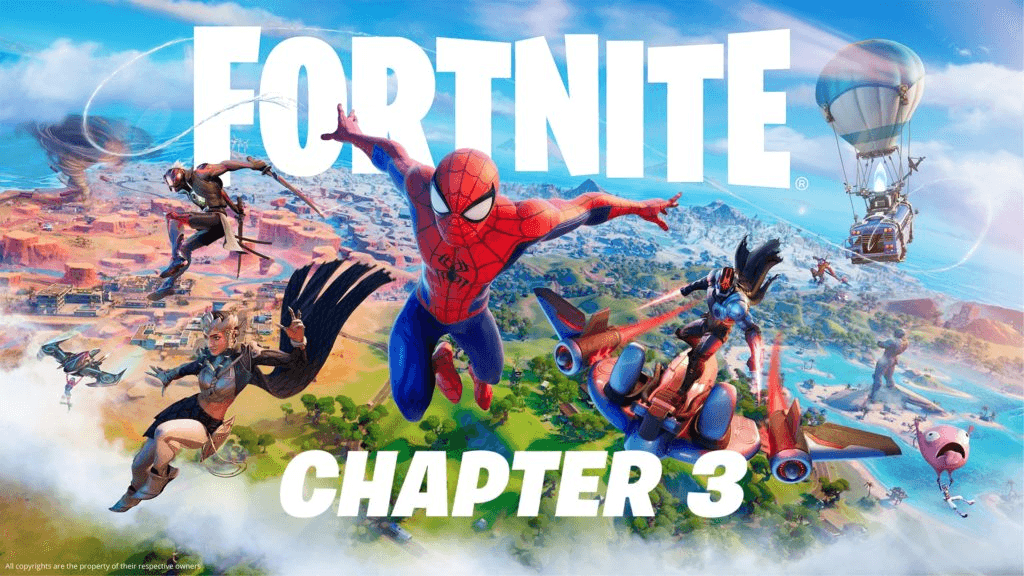
However, microtransactions, loot boxes, and the like which necessitate additional payment from players for uncertain rewards, especially when it’s hard to grind these rewards which are almost compulsory for game progression for free, have proven unpopular. These questionable business tactics have led several gamers to boycott such games.
It is however heartwarming to see games like Borderlands 3- a game where loot boxes and microtransactions can thrive- outright stating that there would be none of those. And they kept their promise. Studios which manage to successfully make and sell games without resorting to microtransactions and loot boxes continue to be well received.
Another trend to notice: in the last decade, free-to-play GaaS AAA games have more than proved their mettle as revenue generators, with games like League of Legends, Apex Legends, and Fortnite generating billions of dollars in profit for their developers and publishers, while also driving a related industry up significantly- esports, which in turn improves their popularity and brings in more players. The amount of money invested in and generated by these games highlights the high financial stakes and potential rewards in the AAA gaming industry.
AAA giant Ubisoft said that they would be “focusing less on AAA games” and more publishers seem to be heading down a similar route as mobile games prove to be the area of largest profit. More and more Triple-A studios are looking towards GaaS and F2P games to bolster their profits. This however doesn’t mean that Triple-A games are dying. AAA titles will always be a dependable bastion for gamers to return to for their preferred franchise, such as the latest FIFA or newest Assassin’s Creed release. Studios often reveal only select details about upcoming AAA games, keeping other information under wraps to build anticipation and maximize marketing impact.
It seems likely that the future of AAA games will proceed in three major directions:
An increase in adoption of the Games as a Service (GaaS) model for games which are extremely rewarding for their players and generate a good deal of revenue, with studios managing ongoing content and live services to deliver consistent value.
The usual franchises remaining as popular as they always have been thanks to their dependable fanbases, as well as established AAA studios trying to create high-quality games for the new generation of consoles and computers. New developments in technology such as VR and AR leading to games that are the first of their kind, creating new opportunities for innovation and growth in the AAA space.

According to Harold Ryan, ex-president/CEO of Bungie, the studio that developed Halo and Destiny, “At their best, Triple-A games can be a generation-defining experience with an oversized cultural impact. They have the power to inspire and influence gamers to become developers.” While games at the end of the day derive their value from the enjoyment they provide to their players, AAA titles show no sign of losing their relevance now, or in the future.
I’m a Senior Content Writer at Gameopedia, where I explore how games, data, and culture intersect. When I’m not writing about game discovery and player insights, you’ll probably find me on a motorcycle, at a quiz, or in a book.